
Sociology Tuition (Class 11 & 12, Indian Society & Change)
Sociology develops the intellectual capacity to view personal experiences within broader social and historical structures. In senior secondary school, students analyze the demographic structure of Indian society, caste hierarchies, tribal communities, gender inequality, and contemporary social movements. Our verified Sociology educators teach students how to employ sociological concepts, utilize national census data, and structure insightful, well-balanced board essays.
Topics Covered
- Class 11: Sociology & Society, Terms, Concepts and their use in Sociology, Understanding Social Institutions (Family, Marriage, Kinship, Work, Economic Life, Politics, Religion, Education), Culture & Socialization, Doing Sociology: Research Methods
- Class 12 Indian Society: Demographic Structure of the Indian Society, Social Institutions: Continuity & Change (Caste, Tribe, Family), Patterns of Social Inequality & Exclusion (Dalit movements, Other Backward Classes, Women’s movements, Divyangjan), The Challenges of Cultural Diversity (Communalism, Regionalism, Secularism)
- Class 12 Social Change and Development in India: Structural Change (Colonialism, Urbanization, Industrialization), Cultural Change (Sanskritization, Westernization, Modernization, Secularization), Change & Development in Rural Society (Land Reforms, Green Revolution), Change & Development in Industrial Society, Social Movements (Peasant, Workers, Environmental, Dalit & Women’s Movements)
- Sociological Research Methodology & Project File Viva Guidance
What Your Child Will Learn
- Deep conceptual understanding of sociological terms (Endogamy, Exogamy, Dominant Caste, Sanskritization, Social Capital)
- Balanced, evidence-based essay writing on social inequality, affirmative action, and secularism
- Integration of census data, government commission reports, and sociological theories into answers
- High-scoring performance across CBSE/State Board descriptive papers and CUET UG domains
Month-by-Month Study Plan
How our teachers pace chapters, revision, and test papers through the year.
Demography & Caste / Tribe Continuity and Change
Malthusian vs Demographic Transition model charts, caste change summary tables
Social Inequality, Exclusion & Cultural Diversity
Affirmative action analysis, communalism vs secularism differentiation sheets
Structural & Cultural Change in India
Sanskritization vs Westernization matrices, urbanization trends notes
Rural/Industrial Society & Social Movements
Green Revolution regional impacts, Chipko and Dalit movement timelines
Board Essay Structuring & Mock Examinations
5 full-length mock papers with line-by-line sociological terminology critique
Common Mistakes in Exams & How Tutors Help
How 1-on-1 teaching helps students avoid common mistakes and save step marks.
Board & Exam Notes
- CBSE: Theory paper is 80 marks with 20 marks allocated to internal project work and viva.
- Board evaluators look for explicit citations of sociological terms and objective analysis of social institutions.
What Happens in the Free Demo Class
- 45-minute lesson examining caste dynamics or the demographic transition theory
- Review of student essay-writing structure and sociological terminology usage
- Personalized syllabus schedule for Class 11 or 12 Sociology
How Home Tuition Helps Your Child
Our teachers come to your home and teach at your child’s pace.

Trial Class Before You Decide
Meet the tutor at home and see how they teach your child before starting regular classes.
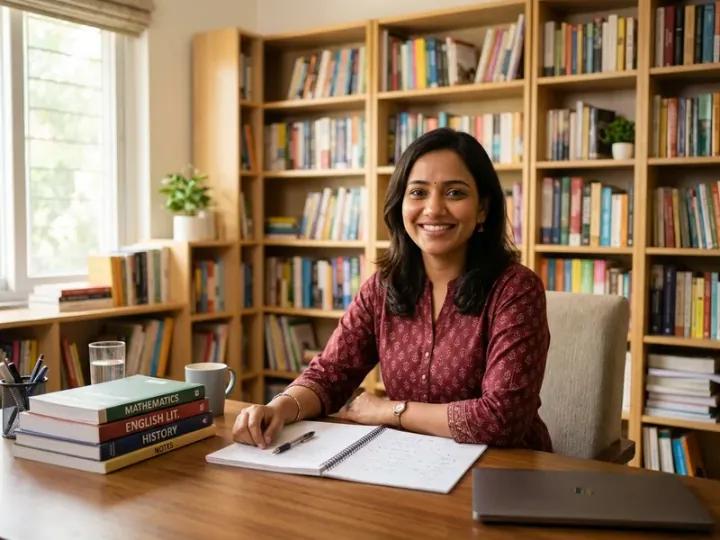
Background-Checked Tutors
We check every teacher’s government ID and university degree before sending them to your home.
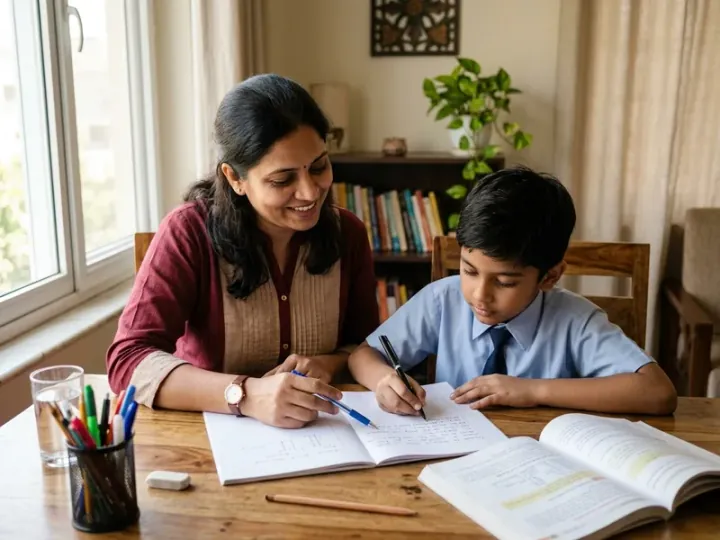
One-to-One Home Guidance
A patient teacher visits your home and focuses on your child’s questions and learning speed.

Clear Concepts & Doubt Solving
Teachers explain basics step by step so students can solve tough questions on their own.

Board & Entrance Exam Prep
Study plans, past 10-year papers, and regular tests to help students score well in exams.
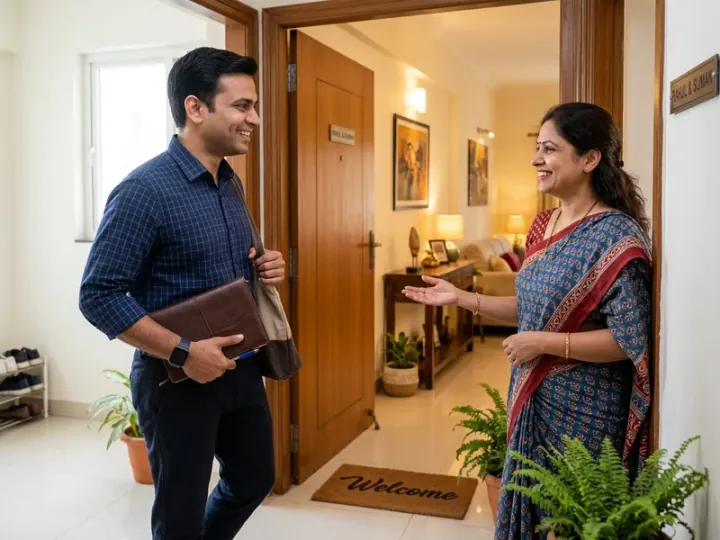
Tutor Matched in 24–48 Hours
Our coordinator connects you quickly with a suitable teacher near your neighborhood.
Questions on Sociology Tuition Tuition
Answers about teacher matching, syllabus coverage, and demo classes.
Explore Other Specialized Tuition Programs:
All SubjectsMathematics Tuition
Step-by-step concept clarity in Arithmetic, Algebra, Geometry, Trigonometry, and Calculus with daily numerical practice.
Science Tuition – Physics, Chemistry & Biology
Deep conceptual mastery in Physics numericals, Chemistry equations, and Biology diagrams for Classes 6 to 12.
English Language, Grammar & Literature Tuition
Build fluent reading comprehension, error-free grammar, formal writing skills, and high-scoring literature answers.
IIT-JEE
Focused 1-on-1 home and online tutoring in JEE Physics, Chemistry, and Mathematics with intensive problem-solving.